
Sandwiched between a Hero MotoCorp showroom and a shop that hires out cooking utensils is a small, dingy building that's been locked up. The non-descript two-room building is a manufacturing unit of Sresan Pharmaceuticals, the pharma company made its Coldriff cough syrup that has allegedly killed 25 children in Madhya Pradesh.

Lining up its 2030 strategy, Hyundai said it was targeting up to 30 per cent export contribution and over 1.5-fold rise in revenue, to cross the 1 trillion milestone in five years.

'Every parent should rethink their decisions to send their children to the US.'

'The US slump could hit our hosiery market hard since 40 per cent of our exports go there.' 'Job losses could be severe if the government doesn't step in fast.'

Within weeks of announcing his exit as executive chairman of the global software-as-a-service (SaaS) company Freshworks, its founder Girish Mathrubootham appears to be on an investment spree.

Bengaluru-based Ultraviolette launches the fighter jet-inspired X-47 Crossover electric motorcycle at Rs 2.49 lakh, with deliveries to commence in October.

For the first time in India, the facility enables 3D printing of aerospace and rocket components up to one metre in height.

Luxury carmakers are shifting into high gear with a mix of product launches, personalised experiences and lifestyle-led engagement.

'The delay is high in India, and even higher in the case of electric vehicles.'

Last fortnight, State Bank of India Chairman C S Setty lifted the veil on a subject long spoken of in corporate corridors: Why can't our banks finance mergers and acquisitions (M&As)? Change is in the air: Indian Banks' Association (of which Setty is the chairman) is to "make a formal request" to Mint Road to make way for it. Thus far the exclusive turf of foreign banks even though its funding remains offshore - as in, it's not on these entities rupee-book (and a few select shadow banks) - a most lucrative segment in the investment banking suite, M&As, will be homeward-bound.

After a subdued first quarter of 2025-26 (Q1FY26), banks are now betting big on the festive season, rolling out attractive loan offers to boost credit growth in the second half of the current financial year (H2FY26) - a trend likely to be further accentuated by the second-order effects of the good services tax (GST) cuts.

Businesses are testing new markets, tapping into domestic demand, and pushing the government for relief.

Hero MotoCorp and TVS Motor crossed Rs 1,000 crore in R&D spend for the first time, as legacy OEMs accelerate innovation to compete with new-age EV players.

The Kerala model is crucial as SMA patients in India had a long wait for a viable treatment option.

India Inc, which is sitting on cash balances of 13.5 trillion, is using the funds to meet capital expenditure as well as brownfield expansion, resulting in 'anaemic' demand for bank loans, State Bank of India (SBI) chairman CS Setty said at an event on Monday. He added that a slowdown in corporate credit is mainly due to lack of demand.

The textile and apparel sector is India's second-largest employment provider, after agriculture, and it is now caught in a wave of uncertainty following the Donald Trump administration's tariff policy.

Some public sector banks, including State Bank of India (SBI), Union Bank of India, Canara Bank, and Bank of India, are increasing the spread on home loans for new customers to protect margins.

Commercial banks in India reported 26 per cent year-on-year (Y-o-Y) growth in slippages at Rs 63,000 crore during the first quarter ended June 2025 (Q1FY26). This was predominantly due to stress in microfinance and unsecured retail portfolios of select lenders.

For kids in the United States, the tariff imposed by the Donald Trump administration on countries like China may no longer be a child's play, as toy prices are predicted to touch record highs this Christmas season. However, for India's toy export industry, which was ready to take giant strides in the sector by bagging heavy orders from the US retail giants like Walmart, Amazon, and Target Corporation, gaining from the China-Plus-One policy, the US tariffs came as a heavy jolt.
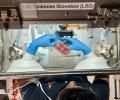
The $1.2 billion in-space manufacturing market is expected to grow and be worth more than $20 billion by 2033.
 © 2026 Rediff.com - Investor Information - Advertise with us - Disclaimer - Privacy Policy - Sitemap - Feedback - About us - Terms of use - Grievances